An Introduction to Science M.S.D.S & the Right to Know Otherwise known as Material Safety Data Sheet The Right to Know Law states that everyone has the right to know about any hazardous chemicals they may be exposed to in the workplace. They are designed for workers and emergency personel Things you might find on the sheets:
Where you can find the sheets:
Metric System The Metric System is used by practically every country in the world, but the United States and several Caribbean nations which are heavily influenced by the U.S.
3 different types of measurements can be used in the Metric System:
It consists of several measurements, which increase by multiples of 10.
To remember the order of the measurements, people usually use Mnemoinc Devices to come up with acronymns. An example acronymn for remembering the order of the Metric System is
|
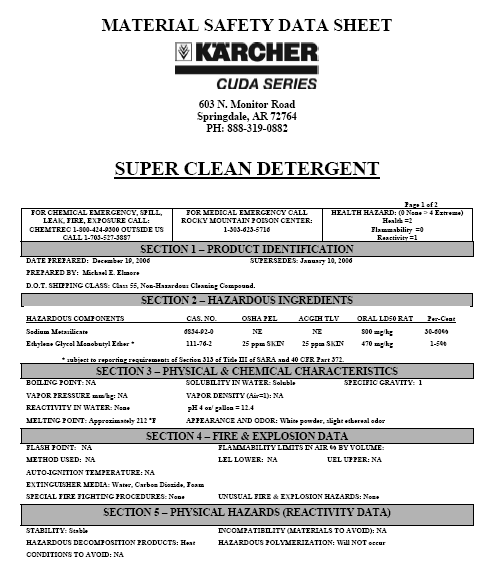 An example page of an M.S.D.S sheet. All M.S.D.S sheets look different from each other, but contain the same information. These sheets display all sorts of safety information such as how to handle the chemical and what to do if exposed to it.
~~~~~~~~~~~~~~~~~~~~~~~~~~~~~~~~~~~~~~~~~~~ 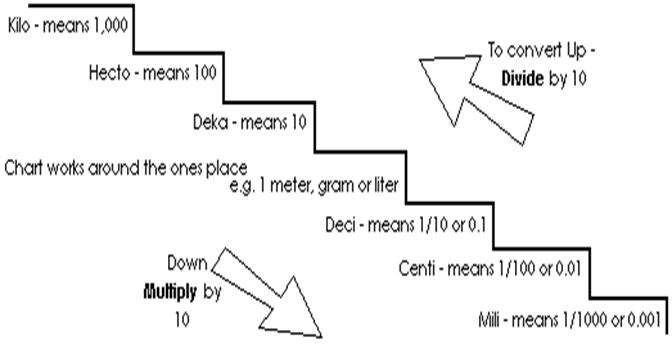 When doing conversions within the metric system all you have to do is move the decimal point, though some people still do multipulcation and division, but actually no math is needed. This is because you are dealing with multiples of 10.  The above conversion was from Millimeters to meters. All you have to do is Millimeters on the order of the listed measurements, then you find out where meters is and count. Since you have to count 3 times to the left, from Milli to meters you have to move the decimal point 3 times to the left. That's how you get from 8939.0 mm to 8.939 m because you move the decimal point 3 times to the left. |
